

How do school funding initiatives become business opportunities?
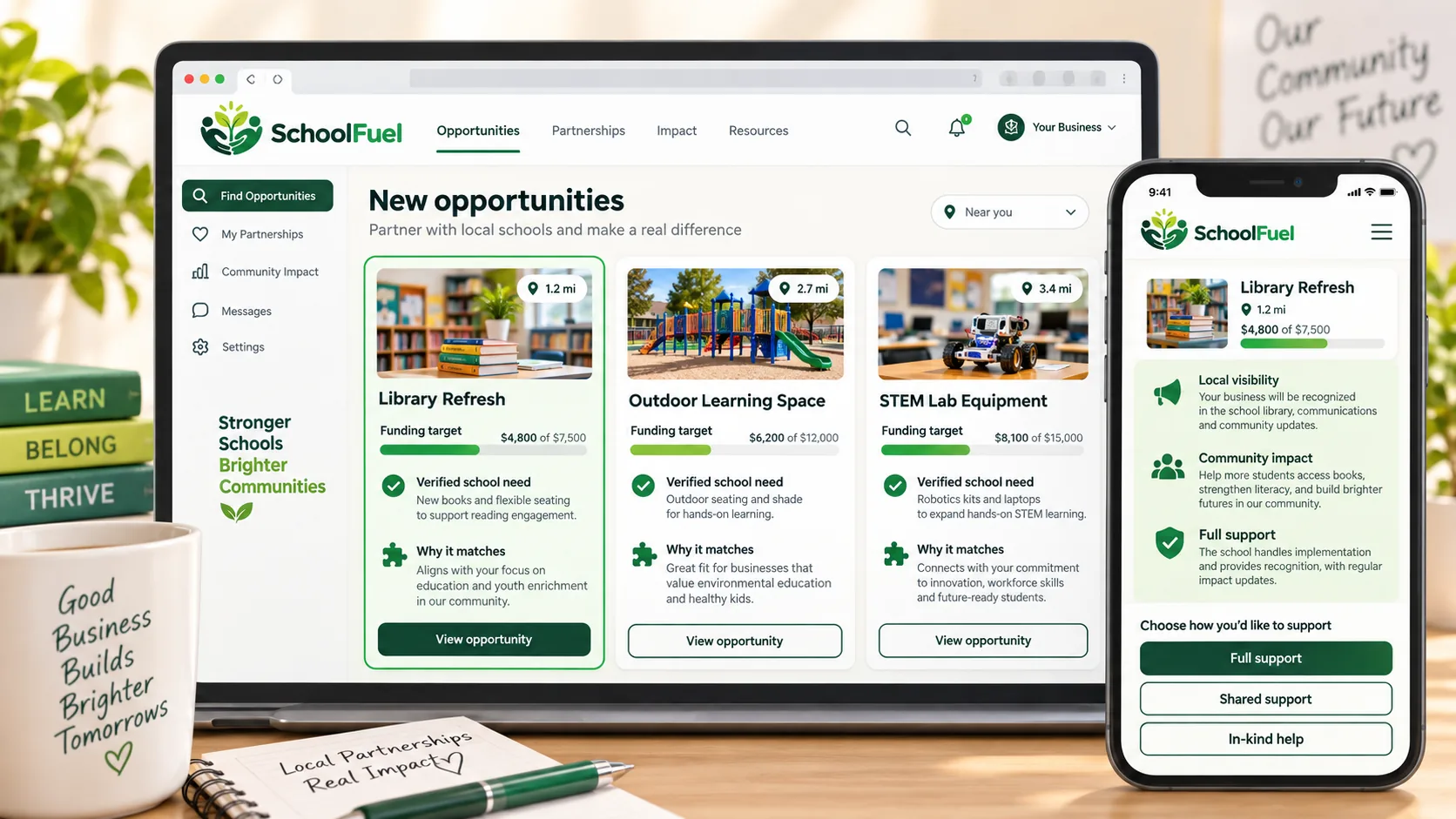
Short answer: SchoolFuel turns a school-approved need into a structured opportunity. Local businesses can see the target, student benefit, timing, match reason and available contribution options before deciding whether the initiative fits.
Traditional sponsorship requests often arrive without enough context. The amount may be unclear, the connection to the business may be weak, and the recognition may not be agreed. That makes even a worthwhile request difficult to assess.
A structured opportunity removes much of that uncertainty. It lets a business understand the need, the local relevance and the expected outcome in one place.
What happens when a school creates a funding initiative?
A PTA, PTFA or Friends group begins by describing what the school needs. The initiative is shaped into a consistent brief and stays under school control before it is made visible to businesses.
A useful opportunity includes:
- the verified school need and intended student outcome;
- the amount, equipment or service required;
- the expected timing;
- the location and relevant community context;
- the contribution types the school can accept;
- the recognition the school has approved.
This means the business is reviewing a defined local project rather than responding to a vague appeal.
How does SchoolFuel match businesses with schools?
The aim is relevance, not sending every opportunity to every company. A business profile can indicate its area, interests, industries, preferred contribution types and approximate giving range.
When a new initiative is published, SchoolFuel can explain why it may suit that business. A match might be based on proximity, an existing connection to families, a relevant product or service, or a community interest the business has selected.
Three practical ways a business can contribute
- Full support
One business funds or supplies the complete verified need and becomes the lead local partner. - Shared support
Two or more businesses contribute toward the same target, making participation more accessible for smaller organisations. - In-kind help
A suitable business supplies equipment, materials, transport, printing, professional services or expertise instead of cash.
Clear options help a business support an initiative at an appropriate level without having to negotiate the entire structure from scratch.
What does a local business receive?
The commercial value is credible community association, not access to families. Depending on the initiative and school policy, a business may receive:
- recognition on the SchoolFuel initiative page;
- an approved thank-you in relevant school channels;
- acknowledgement connected to the supported activity or event;
- a verified outcome summary and approved imagery;
- a useful impact story for its website, social media or staff communications.
SchoolFuel does not sell parent data or promise leads. The platform helps a business be seen for a real, verified contribution while the school controls its communications and student privacy.
Why verified outcomes matter
A logo placement says that support was promised. A completed outcome story shows what the support achieved. Closing the loop gives the school accountability and gives the business a stronger, more credible story to share.
How should a business choose an opportunity?
Begin with fit rather than visibility alone. Consider whether the initiative is close to the area the business serves, aligns with its values or expertise, and sits within a sensible giving budget.
Review the practical details: who manages delivery, when the contribution is required and how the result will be confirmed. Choose recognition that feels proportionate to the support and appropriate for a school environment.
When the match is right, respond promptly and confirm the contribution, responsibilities, dates and agreed recognition in writing.
Frequently asked questions
How can a local business find school funding opportunities?
SchoolFuel presents verified needs matched by location, contribution type, budget and community relevance. Each opportunity explains the student outcome and why it may fit the business.
What can businesses contribute?
A business may provide full funding, shared funding or approved in-kind support such as equipment, materials, professional services or expertise.
What business benefit comes from supporting a local school?
Benefits may include school-approved recognition, a verified impact story and credible visibility connected to a real community contribution. SchoolFuel does not promise leads or share parent data.
Can a small business participate without funding the whole initiative?
Yes. Shared support and in-kind contributions allow smaller businesses to fund or supply a clearly defined part of the need.
See where your business can make a difference.
Create a giving profile, review matched school opportunities and choose the type of contribution that fits.
View business opportunities