
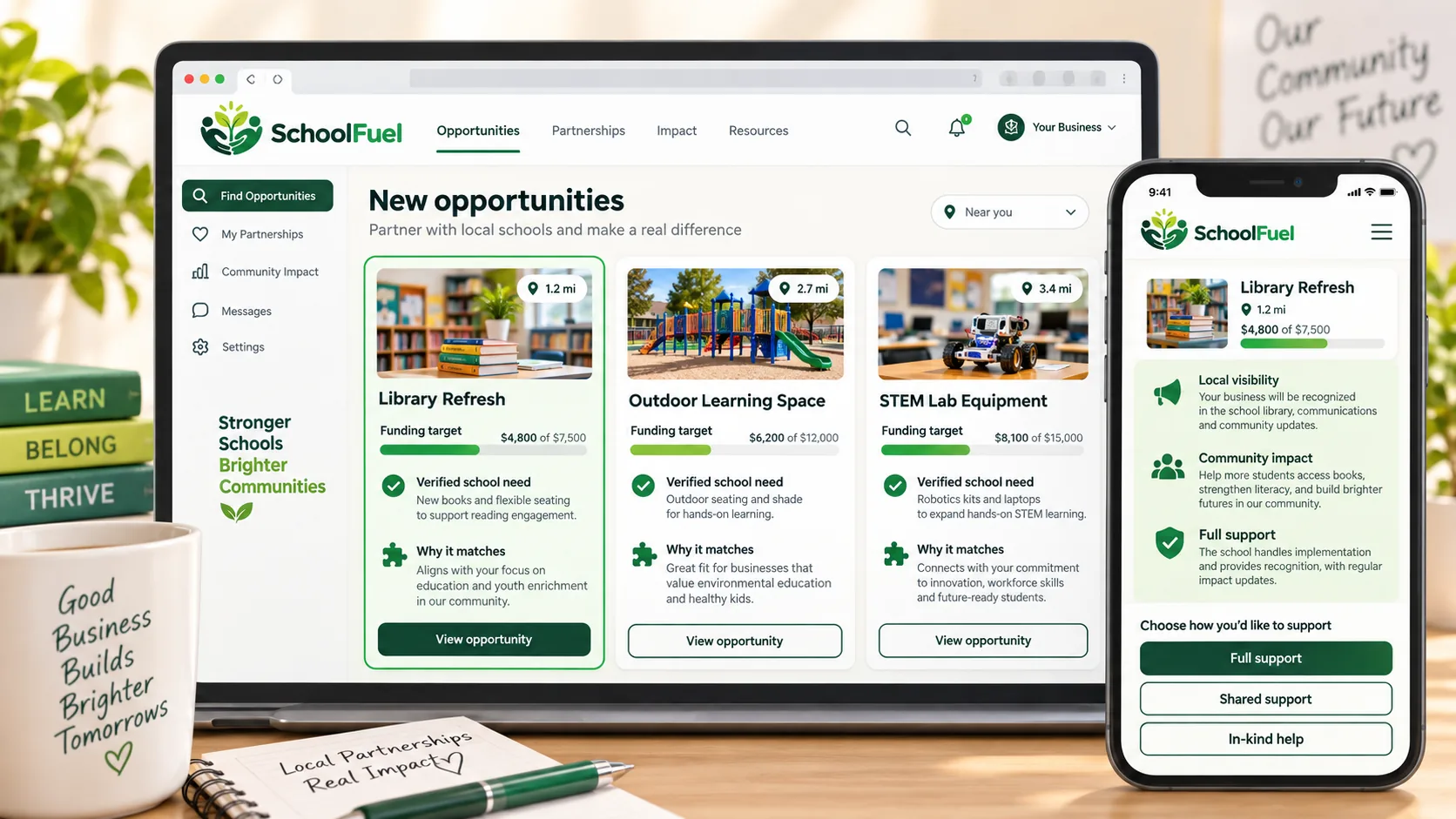
How can a business support STEM at a school?
Short answer: fund a defined classroom outcome—such as a kit, workshop, coding session or teacher resource—and agree the school-controlled recognition before the contribution is made.
Start with a classroom need
A school should name the year level, learning experience, quantity and timing. “STEM support” is broad; “a robotics kit for 30 Year 7 students and two teacher planning sessions” is decision-ready. Include a quote or supplier link and explain what the school will contribute.
Match the opportunity to the business
Engineering, manufacturing, software, trades, science and professional-services businesses may have a natural connection, but relevance is not a guarantee of funding. Ask what the business wants to support: equipment, staff expertise, career exposure or a community outcome. Keep students’ personal information out of the commercial relationship.
Show the value without overclaiming
Report what was delivered: number of sessions, equipment received, class or year-level reach and the next milestone. A business can receive a thank-you, approved event recognition or a school outcome story. It should not receive direct access to children or a promise of recruitment outcomes.
Frequently asked questions
Do STEM sponsors need to be large corporations?
No. A local technology firm, engineer, trades business or professional practice may be able to provide useful cash, equipment or expertise.
Can a business volunteer at a school?
Potentially, if the school approves the activity, checks suitability and manages safeguarding and visitor requirements.
What makes a STEM initiative credible?
A specific student outcome, realistic budget, named school owner, timeline and simple completion report.
Find a school opportunity that fits your business.
SchoolFuel helps businesses discover approved initiatives with clear outcomes and practical support options.
Explore opportunities