

How do schools find local business sponsors?
Short answer: begin with one specific, school-approved need. Approach nearby businesses that have a genuine connection to the area or initiative, and give them a concise proposal covering the outcome, contribution, timing and realistic recognition.
“Can you sponsor our school?” is difficult for a business to assess. “Would you help fund two table-tennis tables so 80 students can join a new lunchtime activity next term?” gives the owner a decision they can understand.
The strongest school partnerships are not built around a generic request for money. They connect a visible student need with a contribution a local business can confidently approve.
What should a school prepare before contacting businesses?
Before approaching anyone, confirm that the initiative has the right school approval. Then create a one-page brief with the facts a business will need.
- The need: what the school community wants to provide or improve.
- The student benefit: who will use it and what will change.
- The target: an exact cash amount, a list of items, or a defined service.
- The timing: when support is needed and when the initiative will happen.
- The evidence: a quote, simple budget or supplier estimate.
- The recognition: what the school is genuinely able and willing to offer.
- The contact: one named person responsible for the conversation.
How to identify the right local businesses
Start with relevance rather than volume. A short list of well-matched organisations usually produces better conversations than emailing every business in the district.
Look close to the school
Owner-managed businesses and local branches often make community decisions locally. Consider businesses near the school, employers of school families and organisations already active in local events.
Match the business to the initiative
A sporting-goods supplier may be suited to an equipment initiative. A building firm could contribute materials or trade expertise. A professional-services firm may prefer to fund a clear project and receive an approved outcome story.
The match does not have to be literal, but it should be explainable. A strong first sentence is: “We thought of your business because…”
Offer more than one contribution route
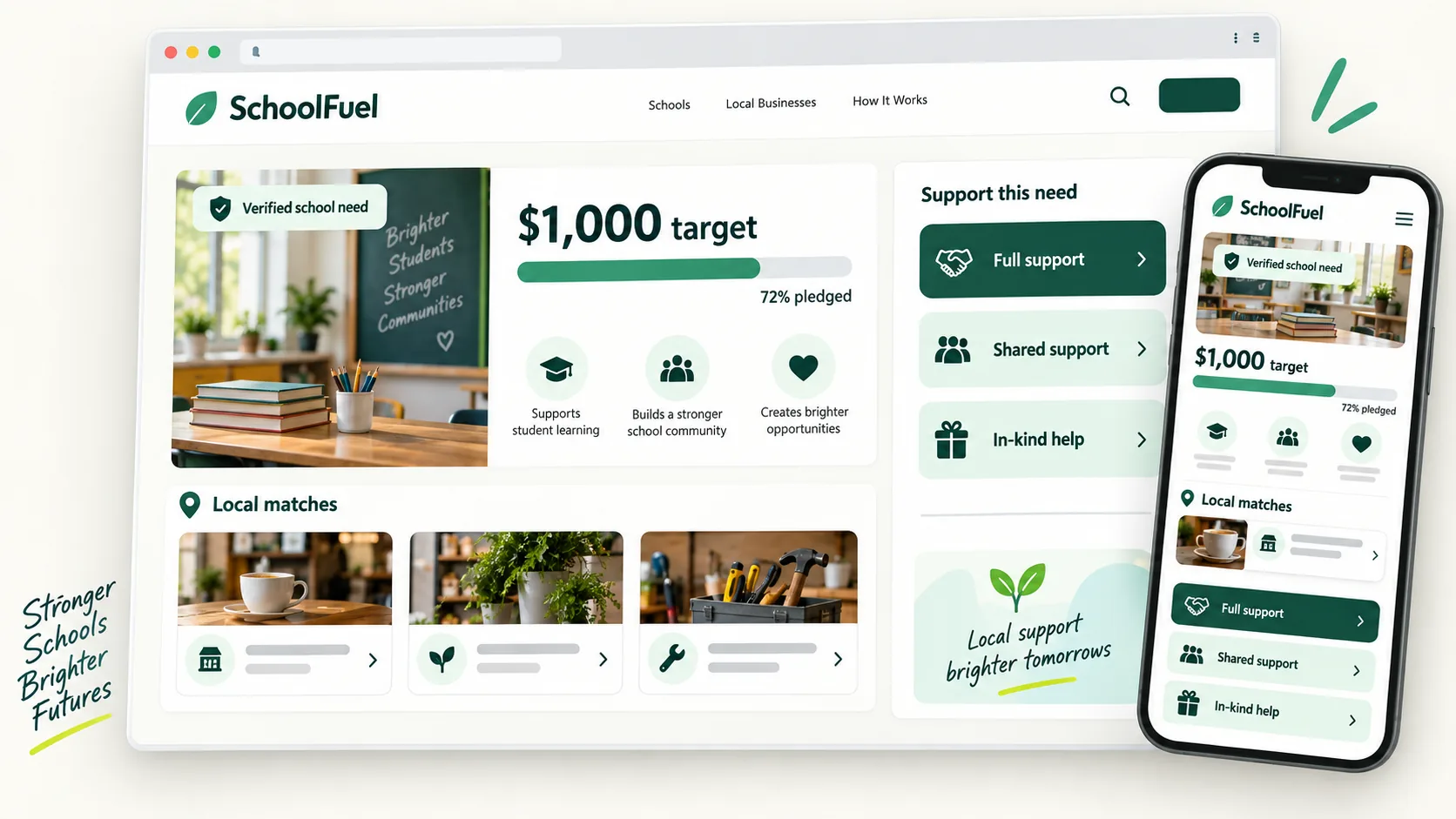
Not every suitable business can fund the whole target. Give practical choices: full support, shared support with another business, or an in-kind contribution. A smaller, well-defined option makes it easier to say yes.
A simple local school sponsorship proposal
Keep the first message short. Attach or link to the full brief only after the opening clearly explains why the opportunity fits.
- Open with the local connection.
Explain why you selected this business rather than sending a generic request. - State the school need.
Use one plain sentence and avoid internal education terminology. - Describe the outcome.
Say what students will be able to do when the initiative is complete. - Make a defined request.
Specify the amount, items or service required and whether shared support is possible. - Explain recognition accurately.
List only benefits already approved by the school. - Suggest one next step.
Ask for a short call or a reply from the appropriate person.
“Kia ora Sam, our parent group is raising $1,000 for equipment for a new lunchtime table-tennis club. We are contacting your business because you are based close to the school and have supported local youth activities before. Would you be open to discussing full, shared or in-kind support?”
What can a school offer a local business?
Businesses generally value credible recognition more than a long list of promotional promises. Depending on school policy, appropriate recognition may include:
- acknowledgement on the initiative page;
- a thank-you in a school or parent-group newsletter;
- recognition at the related event;
- an approved photo and outcome summary for the business to share;
- a clear report showing that the initiative was delivered.
Agree these details before accepting support. Avoid promising access to families, sales leads or unrestricted use of student images.
Protect student and parent privacy
A business does not need parent contact details to gain useful community recognition. Keep school communications under school control, secure permission for any identifiable imagery and share only the outcome information both parties have approved.
How and when should a school follow up?
Allow enough time for a busy owner or manager to review the request. A polite follow-up after about a week is reasonable. Restate the initiative in one sentence, provide the deadline and offer to answer questions.
If the answer is no, thank the person and leave the relationship intact. The timing, budget or initiative may simply be a poor fit. Record the response so another volunteer does not unknowingly repeat the same request.
When a business says yes, confirm the contribution, recognition, responsibilities and dates in writing. After delivery, close the loop promptly with a thank-you and a verified outcome.
Frequently asked questions
How do schools find local business sponsors?
Start with one specific, school-approved need. Identify nearby businesses whose customers, services or community interests fit that need, then send a short proposal stating the outcome, contribution, timing and recognition.
What can a school offer a business sponsor?
Depending on school policy, recognition may include an initiative-page acknowledgement, newsletter thank-you, event mention or an approved outcome story. Agree benefits before funding.
Does school sponsorship require sharing parent data?
No. A credible partnership can provide community visibility without sharing parent contact details or other personal data.
Can a business support a school without providing cash?
Yes. Equipment, materials, professional services, transport, printing, venues and staff expertise can all be valuable in-kind contributions when approved by the school.
SchoolFuel helps make the request clear.
Describe the school need in one sentence, shape a business-ready initiative and keep the school in control of what gets published.
Start a school initiative